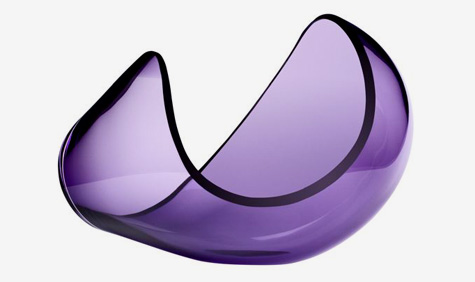
Say "Scandinavian Design" and most people visualise furniture, glass and domestic ware with forms and simple, clean lines. The aesthetic is immedietely recognisable, especially since the Swedish home-furnishing giant IKEA invaded the world.
Elegant, light, sparse - these are all descriptive of the Scandinavian look - along with a respect for natural materials and superb cratsmanship. The key is not only good looks, but also utility. This picture of Scandinavian design, whie having roots in traditional crafts, is very much a product of the 20th century and the age of Functionalism.
Functionalism applies to various movements such as the International Style and Bauhaus. In Scandinavia it has been a source of inspiration since the 1930s.
The move away from ornamentation in favour of clean shapes and lines, allowing for the pure expression of the essence of stractures, was more than a mere change in taste. Adherents to this style, which manifested itself in the new materials(tubular metal, steel and glass), also embraces a vision for a new world, one where architecture and design could contribue to the levelling out of injustice in modern society. In Scandinavia, not only were the aesthetics of the modern, international style eagerly adopted, the social agenda behind the style was also very popular.


Designers also began to heed ergonomic research at industrial companies like the car-makers Saab and Volvo. Today, the adage "form follows fiction" is taken to a high science in Scandinavia. Aesthetics are fused with efficiency for everything from utensils to welding equipment, as seen in the products of Ergonomi Design Gruppen(Sweden). Numerous pieces from the early 20th century remain as popular as ever, for example, stools by the Finnish architect and designer, Alvar Aalto.
The success for Nordic design has made it a standard far beyond the boundries of Northern Europe - from time-tested pieces, such as the Stokke Tripp Trapp chairs by the Norwegian, Peter Opsvik, to the works of the multitalented Stefan Lindfors, whose output includes designs for Finnish companies Arabia (porcelain) and Marimekko (textiles); from glass and crystal designed for Kosta Boda and Orrefors (Sweden) by Ulrika Hydman-Vallien to Nokia telephones (Finland) by Frank Nuovo.
In part of the world forsaken by the sun for half the year, Scandinavians exploit interiors to maximise light. Even national characteristics may be seen as a source of style. Just as their design is characterised as rather stark, cool, unadorned, the Scandinavian character is often reserved sombre - hardly excessevely embellished.